
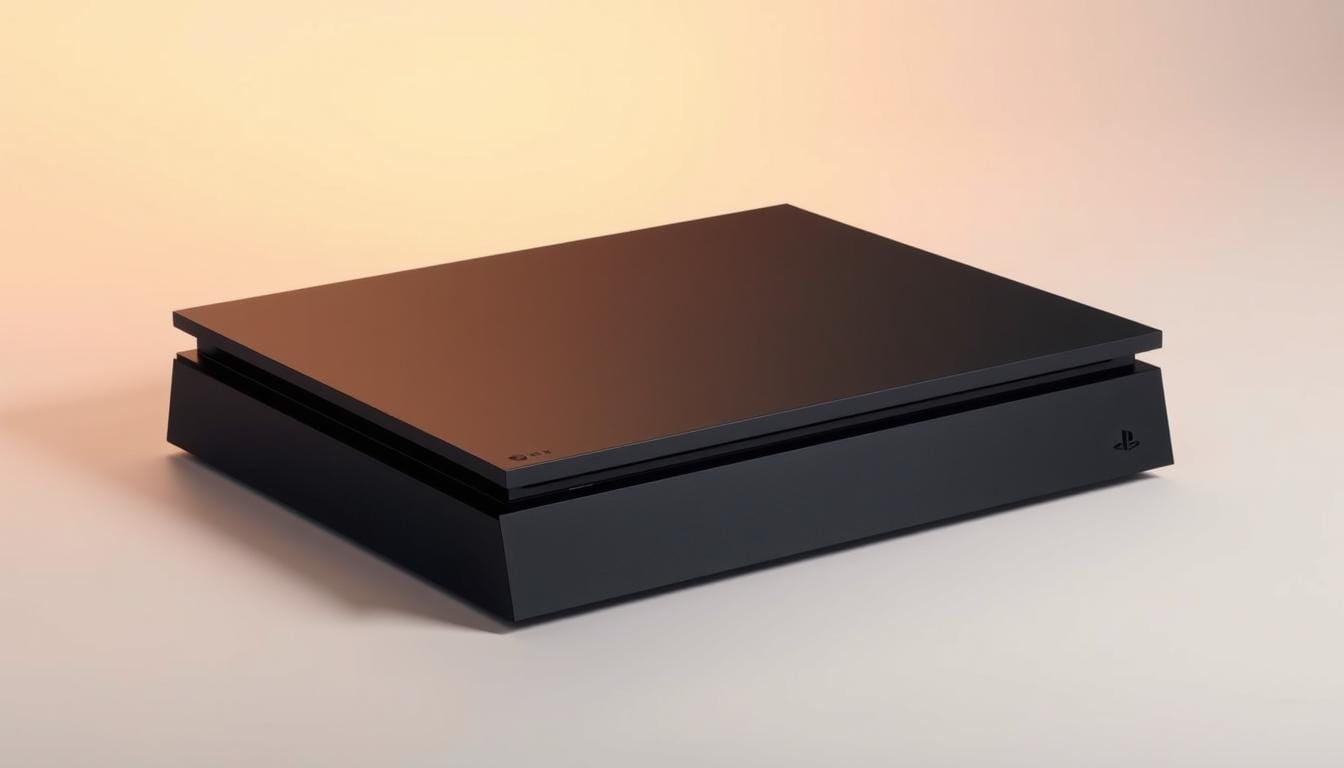
New PlayStation 6: What to Know About Sony’s Next Console
Playstation 6 Coming Soon ! Remember the first time you unboxed a PlayStation? That rush of excitement as you held the controller, ready to dive into worlds beyond imagination. For decades, Sony has shaped how we play, connect, and experience stories—and that journey is far from over. Today, the gaming giant’s leadership confirms what fans worldwide have wondered: the next evolution is coming.
Sony Interactive Entertainment CEO Hideaki Nishino recently called the upcoming console a “top priority” during a June 2024 presentation. While details remain under wraps, one thing’s clear: this project builds on the PS5’s record-breaking success. Over 65 million units sold since 2020 prove players crave deeper, faster, and more immersive experiences.
You’re part of a massive community driving this innovation. Millions still enjoy PS4 titles, while PS5 owners push hardware limits daily. Sony knows your loyalty—and their next system aims to reward it. Think seamless backward compatibility, groundbreaking visual tech, and services that grow with your gaming habits.
What does this mean for you? A future where loading screens vanish, worlds feel tangible, and multiplayer matches unite players globally. The company’s focus remains on keeping you engaged, whether through exclusive titles or social features that turn strangers into allies.
This guide unpacks everything revealed so far. Let’s explore what’s ahead—and why your next console could redefine how you play.
Latest Developments on the new playstation 6
Gaming evolves faster than ever, and Sony’s leadership isn’t staying quiet. At a June 2024 industry event, Sony Interactive Entertainment CEO Hideaki Nishino called the upcoming system a “top mind priority” for the company. While specifics remain scarce, this marks the clearest confirmation yet that development is full steam ahead.
Industry Rumors and Official Statements
Leaked Microsoft documents from 2022 hinted at a 2028 timeline, but whispers now suggest 2027. Nishino acknowledged these theories but emphasized Sony Interactive Entertainment’s focus on “getting it right, not rushed.” Analysts speculate the AMD partnership announced for 2026 could lay groundwork for advanced ray tracing or AI-driven gameplay.
You’ve seen how PS5 Pro pushed graphical boundaries. The next leap likely involves smarter hardware integration. “Players deserve experiences that grow with them,” Nishino stated, hinting at adaptive features tied to user behavior.
Sony’s Commitment to Next-Gen Gaming
The company’s strategy extends beyond raw power. Backward compatibility remains central, ensuring your existing library stays relevant. Interactive entertainment president John Kodera recently noted investments in “persistent worlds” that blend single-player depth with live-service flexibility.
While Hideaki Nishino couldn’t share details, his team’s track record speaks volumes. From VR innovations to cloud saves, Sony Interactive consistently rewards loyalty. Your future gameplay might involve instant world-hopping or AI companions that learn from your tactics.
One thing’s certain: Sony’s next console won’t exist in isolation. It’ll anchor an ecosystem where your progress, friendships, and achievements carry forward—no reset button required.
Cutting-Edge Technology and Enhanced Gameplay
Imagine stepping into worlds where every detail feels alive—textures you could reach out and touch, lighting that bends reality. This vision drives Sony’s hardware evolution, blending raw power with intelligent design to redefine interactive entertainment.
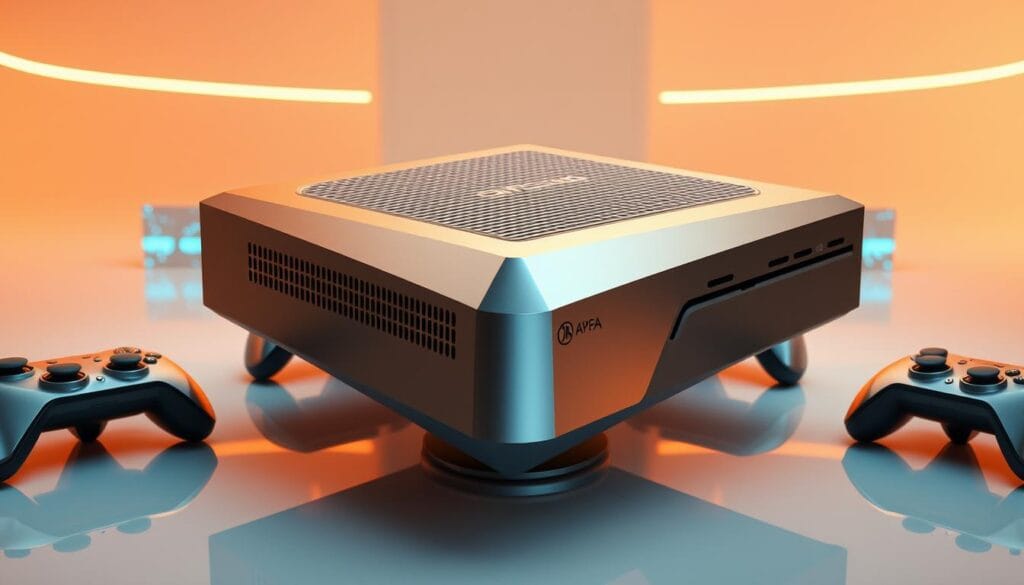
Innovative Hardware and Graphics Breakthroughs
At the core lies UDNA architecture, building on AMD’s RDNA 5 framework. This leap pairs 3nm manufacturing with GDDR7 memory, delivering 40% faster data transfer than current systems. You’ll notice richer environments in open-world games, where distant terrain stays sharp even at full sprint.
AMD’s 3D V-Cache stacks memory vertically, tripling available cache space. Loading screens? Gone. Swap between multiplayer matches and story campaigns instantly—your progress waits exactly where you left it.
Integration of Machine Learning and Enhanced Performance
The GPU’s machine learning upgrades transform PlayStation Spectral Super Resolution. Scenes render with “pixel-perfect clarity” at 8K resolutions while maintaining smooth frame rates. Whether battling aliens or racing supercars, every visual detail stays crisp during chaotic action.
Zen 4/Zen 5 processors balance workloads between CPU and GPU seamlessly. Your gameplay adapts in real-time—AI opponents learn your tactics, while dynamic weather systems reshape battlefields based on player choices.
Cloud Gaming and User Experience Advantages
While cloud streaming expands access, Sony confirms local hardware remains king. 93% of players prefer downloading titles outright according to internal surveys. You’ll enjoy lag-free combat in fighting games and instant response times in platformers—no internet hiccups disrupting your flow.
This hybrid approach lets you choose your experience. Stream indie gems during commutes, then dive into AAA blockbusters at home with full graphical might. Either way, your achievements sync effortlessly across devices.
Market Trends, Release Speculations, and Competitor Comparisons
The race to dominate living rooms is heating up faster than a GPU under load. Nintendo’s Switch 2 selling 3.5 million units in four days lit a fire under Sony and Microsoft. Both companies now race to showcase their next-generation visions—and your gaming habits hang in the balance.
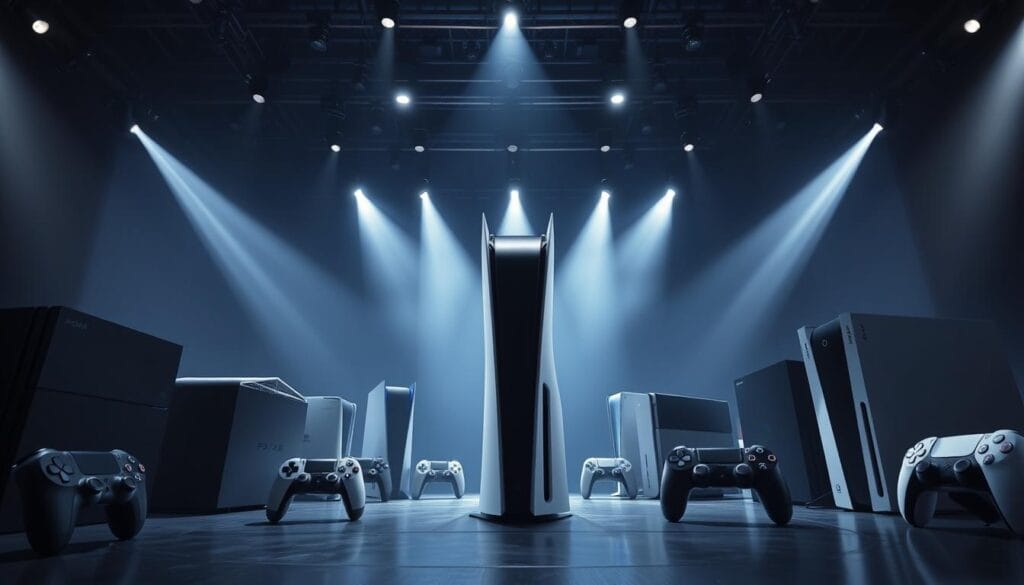
Comparing Prospects with Current and Rival Systems
Microsoft’s AMD partnership aims to deliver Xbox’s “most powerful hardware ever” by fall 2026. This could pressure Sony to accelerate plans, though insiders stress quality over speed. Their two-year development cycle suggests a 2027 launch, mirroring gaps between PS4 and PS5 releases.
Backward compatibility remains a key battleground. While Xbox pushes cloud gaming, Sony bets on hybrid flexibility—letting you play AAA titles locally or stream indies on-the-go. Your existing library stays relevant, but upgraded visuals and load times make upgrades tempting.
Timelines and Portable Potential
Prototype production kicks off late 2025, aligning with Sony’s historical patterns. Leaked documents hint at a handheld companion device—essentially a portable PS5—that could launch alongside the main console. Imagine continuing your campaign seamlessly from couch to commute.
With all three console makers prioritizing player-focused content, the next few years promise unprecedented choice. You won’t wait a decade for leaps in performance. Rivalry breeds innovation—and your controller will be the ultimate beneficiary.
Conclusion
Balancing innovation with accessibility remains Sony’s ultimate test. The PS6 aims to push boundaries in interactive gaming, but its success hinges on convincing players their upgrade delivers unmatched value. You’ll weigh enhanced performance against your current setup—whether that’s a PS4 gathering dust or a PS5 humming under the TV.
Advanced tech like 3D V-Cache boosts speed but raises production costs. This creates a pricing tightrope: premium features must justify the tag while staying within reach. Expect heated debates about what defines a “next-gen” console as launch details emerge.
Sony’s leadership keeps this project top of mind, prioritizing experiences over specs alone. Your future gameplay could blend cinematic storytelling with adaptive challenges that evolve based on skill. Yet without clear pricing strategies, even groundbreaking content risks limited adoption.
Stay tuned for official reveals about timelines and capabilities. One truth endures: every hardware leap redefines how stories unfold in your living room. When the time comes, you’ll decide if this vision aligns with your idea of gaming’s future—or if existing systems still satisfy.